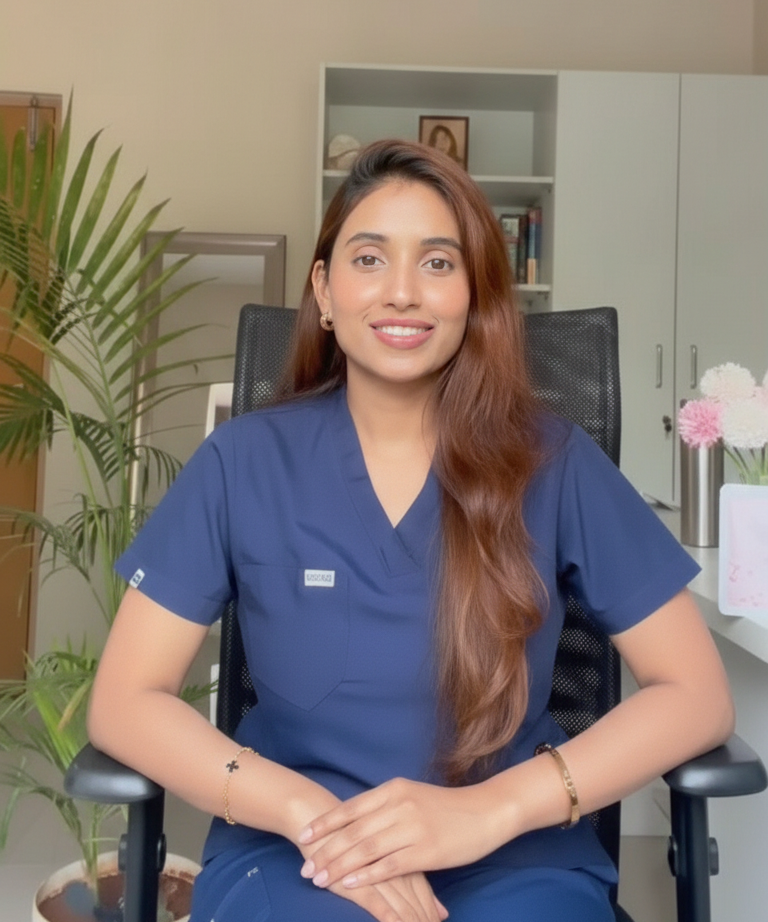
By Dr. Vishakha Iyer, Dermatologist & Aesthetic Medicine Specialist | Cheveuderm, Bangalore | Updated June 2026
If you’ve been researching acne scars, open pores, or skin tightening, you’ve probably come across the term MNRF — and wondered exactly what it means, how it works, and whether it’s the right treatment for your skin.
This is the complete answer. Written by a practising dermatologist, not a marketing team.
What is MNRF? Full Form & Definition
MNRF full form: Microneedling Radiofrequency.
MNRF — also written as RF microneedling or microneedling RF — is a medical-grade skin treatment that combines two well-established technologies in one procedure:
- Microneedling — ultra-fine needles create precise, controlled micro-channels in the skin, triggering the body’s natural wound-healing and collagen production response.
- Radiofrequency energy — delivered through the tips of the same needles, heating the deeper layers of the skin to stimulate collagen remodelling at a structural level.
The result: a treatment that works simultaneously at the surface and deep within the dermis — going significantly further than microneedling alone can reach.
In simple terms: MNRF uses needles to get radiofrequency heat precisely where it needs to go — deep in the skin, not on the surface. That’s what makes it different.
If you’re deciding between options, read our detailed comparison: derma roller vs MNRF microneedling — which breaks down exactly where each treatment fits.
What Does MNRF Stand For?
| Term | Meaning |
|---|---|
| M | Microneedling |
| N | Needle-based delivery, linking microneedling with RF delivery |
| RF | Radiofrequency |
You may also see MNRF referred to as:
- RF microneedling
- Radiofrequency microneedling
- MNRF laser treatment
- Fractional RF microneedling
- MNRF skin treatment
Important: MNRF is sometimes called “MNRF laser treatment” online, but that is technically incorrect. MNRF uses radiofrequency energy, not laser light.
At Cheveuderm, Bangalore, we use the term MNRF as standard — and it always refers to the needle-delivered radiofrequency procedure performed by Dr. Vishakha Iyer.
The MNRF Machine — What Equipment is Used?
The MNRF machine is a medical-grade device with two core components:
1. The Handpiece
The handpiece holds a cartridge of ultra-fine, insulated microneedles. These needles are gold-tipped and coated except at the very tips — so radiofrequency energy is only released at the precise depth the dermatologist sets, not along the needle shaft.
This is critical for safety on Indian skin tones.
2. The RF Generator
The generator delivers controlled radiofrequency energy through the needle tips once they reach the target depth in the dermis. The dermatologist controls both energy intensity and the duration of each pulse.
Why the Machine Matters
Not all MNRF machines are equal. Medical-grade devices allow precise control of needle depth, RF energy level, and pulse duration — making them fundamentally different from non-medical devices sometimes used at beauty salons.
At Cheveuderm, HBR Layout, Bangalore, we use professional-grade MNRF equipment calibrated specifically for Indian skin to ensure both safety and efficacy.
The MNRF Needle — What You Need to Know
The MNRF needle is not like an injection needle. Here’s what makes it different:
- Insulated shaft — the body of the needle is coated so RF energy cannot escape through the sides.
- Active tip only — RF energy is delivered only from the uncoated tip at the target depth.
- Gold-tipped — used for biocompatibility and optimal energy conduction.
- Adjustable depth — set by the dermatologist based on your concern, shallower for open pores and deeper for acne scars.
- Single-use cartridges — each patient gets a sterile, brand-new needle cartridge, discarded immediately after their session.
This precision is why MNRF can be safely used on Indian skin tones — the RF energy goes exactly where it’s directed.
The MNRF Procedure — Step by Step
Here is exactly what happens during an MNRF procedure at Cheveuderm, Bangalore:
Step 1 — Skin Consultation & Assessment
Before any treatment, Dr. Vishakha Iyer assesses your skin type, Fitzpatrick classification, scar depth, pore size, and skin laxity. This determines the needle depth and RF energy settings — personalised to your skin, not a standard preset.
Step 2 — Numbing Cream Application
A topical anaesthetic cream is applied and left for 30–45 minutes. Most patients describe the sensation during treatment as mild warmth and pressure, not pain.
Step 3 — Cleansing
The numbing cream is removed and the skin is thoroughly cleansed and prepared.
Step 4 — MNRF Delivery
The handpiece is moved systematically across the treatment area in a grid pattern. At each point, the needles penetrate to the preset depth and deliver a precise burst of RF energy. A full face session takes approximately 45–60 minutes.
Step 5 — Soothing Serum & SPF
A calming, hydrating serum is applied immediately post-treatment. Broad-spectrum SPF 50+ is applied before you leave.
Step 6 — Aftercare Instructions
Dr. Vishakha provides a personalised written aftercare protocol — including what to avoid, when to resume normal skincare, and what to expect in the days following.
What is MNRF Treatment Used For?
MNRF skin treatment is one of the most versatile in-clinic skin procedures available. It is used for:
MNRF for Acne Scars
The most common indication. MNRF for acne scars works by delivering RF heat to the fibrous scar tissue beneath the skin — breaking down scar collagen and triggering the growth of new, organised collagen in its place.
Ice pick, boxcar, and rolling scars all respond to MNRF, with rolling and boxcar scars showing the most dramatic improvement.
MNRF treatment for acne scars typically requires 4–6 sessions for significant correction, with improvement continuing for 3–6 months after the final session.
You can also read about acne causes and why scars form differently on Indian skin for more context.
Open Pores Treatment
MNRF tightens the structural collagen around enlarged pores, physically reducing pore size from within — something no topical product can achieve.
For a full understanding of why open pores appear on the face and what actually helps, we’ve covered this in detail separately.
Most patients see visible pore refinement from session 2–3 onwards.
Skin Tightening & Laxity
The RF component specifically targets skin tightening by contracting existing collagen and stimulating new collagen formation in the deeper dermis.
This makes MNRF effective for early jowling, neck laxity, and general loss of skin firmness.
For more advanced laxity, HIFU skin tightening may be recommended alongside or instead.
Skin Texture Improvement
By resurfacing at a deep level, MNRF significantly improves uneven skin texture, roughness, and dullness — leaving skin smoother and more refined over the course of treatment.
MNRF with PRP
MNRF with PRP is a combination protocol that amplifies results.
After the MNRF session creates micro-channels in the skin, PRP — a concentrated extract of your own blood’s growth factors — is applied or injected into the treated area.
The micro-channels allow PRP to penetrate deeper than it could otherwise reach, accelerating healing and enhancing collagen stimulation.
At Cheveuderm, MNRF + PRP is offered as a combined session for patients seeking maximum scar correction or faster results.
Learn more about PRP treatment at Cheveuderm.
MNRF Treatment Benefits
The key MNRF treatment benefits that make it a first-choice option for many patients:
1. Works at a Deeper Level Than Standard Microneedling
RF energy reaches the reticular dermis — the deep structural layer — where topical products and surface treatments simply cannot penetrate.
2. Safe for Indian Skin Tones
Unlike ablative laser treatments that target melanin, MNRF delivers energy below the skin surface. This means no melanin disruption and a significantly lower risk of post-inflammatory hyperpigmentation — the primary skin risk for Indian and darker skin tones after energy-based treatments.
3. Addresses Multiple Concerns in One Treatment
A single course of MNRF can simultaneously improve acne scars, open pores, skin texture, and early laxity — making it highly efficient.
4. Progressive, Long-Lasting Results
MNRF results continue to develop for 3–6 months after treatment as new collagen matures. This is not a short-lived surface effect — the collagen remodelling is structural and lasting.
5. Minimal Downtime
Unlike ablative laser resurfacing, MNRF requires only 24–48 hours of mild redness and swelling. Most patients return to work the next day.
6. Personalised Protocols
Depth, energy, and pulse settings are adjusted per session based on your skin’s response — so treatment evolves as your skin improves.
MNRF Treatment Side Effects
MNRF treatment side effects are mild and temporary when performed by a qualified dermatologist. Here is what to expect:
Normal & Expected Side Effects
| Side Effect | Duration | What to Do |
|---|---|---|
| Redness | 24–48 hours | Apply prescribed serum; avoid makeup for 6 hours |
| Warmth & mild swelling | 24–48 hours | Cold compress if needed |
| Mild tightness | 2–3 days | Moisturise generously |
| Micro-crusting | 3–5 days | Do not pick; let it resolve naturally |
| Increased skin sensitivity | 5–7 days | SPF 50+ mandatory outdoors |
Side Effects That Should Not Occur With Correct Technique
When MNRF is performed by a trained dermatologist with calibrated settings for your skin type, the following should not occur:
- Post-inflammatory hyperpigmentation
- Prolonged swelling beyond 72 hours
- Infection or pustules
- Scarring or burns
Important: MNRF side effects risk increases significantly when performed by non-medical practitioners or without a proper Fitzpatrick skin assessment. This is why dermatologist supervision matters — not a marketing claim.
Aftercare to Minimise Side Effects
- Apply SPF 50+ every morning for 2 weeks post-treatment.
- Avoid retinol, AHA, BHA, and vitamin C actives for 5–7 days.
- Avoid saunas, steam rooms, or intense exercise for 48 hours.
- Use a gentle, fragrance-free moisturiser twice daily.
- Do not pick, press, or rub the treated skin.
MNRF Results — What to Expect and When
Here is an honest, session-by-session breakdown of realistic MNRF results:
After Session 1
- Mild redness for 24–48 hours, then settled.
- Skin feels slightly tighter — most patients notice this within days.
- No dramatic visible change yet — collagen takes time to form.
- Improved skin tone and texture begin subtly within 2–3 weeks.
After Session 2–3
- Visible improvement in pore appearance — pores look noticeably tighter.
- Early scar softening — edges of boxcar and rolling scars begin to smooth.
- Skin texture significantly more even.
- Many patients see the most noticeable jump between sessions 2 and 3.
After Session 4–6: Acne Scar Protocol
- Significant scar reduction — rolling and boxcar scars often 50–70% improved.
- Open pores substantially refined.
- Skin firmness and density visibly increased.
- Full MNRF treatment result continues developing for 3–6 months post-course.
What the Research Shows
Clinical studies on RF microneedling for acne scars report an average improvement of 50–80% in scar appearance over a full treatment course. Results vary depending on scar type, depth, and skin type — which is why a personalised assessment matters more than general statistics.
At Cheveuderm, Dr. Vishakha Iyer photographs patients at each session to track objective improvement — so you can see your own MNRF treatment before and after progression clearly.
MNRF vs MNRF Laser Treatment — Clearing Up the Confusion
You may have seen the term MNRF laser treatment or MNRF laser used online. Here’s the clarification:
MNRF is not a laser treatment. It uses radiofrequency energy — electrical energy delivered as heat — not light energy, which is what lasers use.
The confusion arises because:
- Both MNRF and laser treatments are energy-based procedures.
- Some clinics market MNRF loosely as a “laser”.
- MNRF is sometimes combined with laser treatments as a multi-modality protocol.
The distinction matters clinically: lasers target chromophores like melanin, while RF energy targets water molecules in the tissue and generates heat regardless of skin colour.
This is why MNRF is safer for Indian skin than most laser resurfacing treatments.
For pigmentation concerns specifically, laser skin treatment or chemical peels may be recommended alongside MNRF.
MNRF Treatment Cost in India
MNRF treatment cost in India varies considerably depending on:
- The city
- Whether performed by a qualified dermatologist or a technician
- The equipment used
- The number of sessions in your plan
- Whether MNRF is combined with PRP or other treatments
MNRF treatment cost in Delhi at reputable dermatology clinics typically ranges from ₹8,000–₹20,000 per session. In Bangalore, pricing is comparable.
RF microneedling cost and microneedling RF cost at dermatologist-led clinics is higher than at beauty salons — reflecting medical-grade equipment, proper Fitzpatrick assessment, and physician oversight.
Radio frequency treatment cost in general, including HIFU, RF skin tightening, and MNRF, spans a wide range depending on the technology. MNRF sits in the mid-to-upper tier of RF treatments.
At Cheveuderm, HBR Layout, Bangalore, MNRF treatment cost is confirmed after a full skin assessment by Dr. Vishakha Iyer — because quoting a price without examining the skin first is not responsible dermatology.
For a personalised MNRF cost in Bangalore → book a consultation at Cheveuderm
Who is a Good Candidate for MNRF?
MNRF is well-suited for patients who have:
✅ Pitted acne scars — ice pick, boxcar, rolling
✅ Enlarged open pores on the face
✅ Early skin laxity or loss of firmness
✅ Uneven skin texture or chronic dullness
✅ Skin that hasn’t responded adequately to topical treatments
✅ Indian or darker skin tones
MNRF is typically avoided or modified for patients with:
❌ Active acne or open skin infections
❌ Recent isotretinoin use
❌ Known keloid or hypertrophic scar tendency
❌ Pregnancy or breastfeeding
❌ Active autoimmune skin conditions
Frequently Asked Questions About MNRF
What is MNRF treatment?
MNRF, or Microneedling Radiofrequency, is a dermatologist-performed skin treatment that uses insulated gold microneedles to deliver radiofrequency energy precisely into the dermis — stimulating collagen remodelling for acne scars, open pores, and skin tightening.
What does MNRF stand for?
MNRF stands for Microneedling Radiofrequency.
Is MNRF the same as RF microneedling?
Yes. MNRF and RF microneedling refer to the same treatment. Other names include radiofrequency microneedling and MNRF skin treatment.
How painful is the MNRF procedure?
With topical anaesthetic applied 30–45 minutes before treatment, most patients experience only mild warmth and pressure — not significant pain.
How long does an MNRF session take?
A full-face MNRF session at Cheveuderm takes approximately 45–60 minutes, plus 30–45 minutes for numbing cream.
Is MNRF better than laser for acne scars?
For Indian skin tones specifically, MNRF is often preferred over ablative laser resurfacing because it carries a significantly lower risk of post-inflammatory hyperpigmentation.
For pigmentation alongside scars, a combination approach with laser treatment may be recommended.
Can MNRF be done on the neck or body?
Yes. MNRF can be performed on the neck, décolletage, and selected body areas. Settings are adjusted for each area’s skin thickness.
How is MNRF with PRP different from MNRF alone?
MNRF with PRP combines the procedure with platelet-rich plasma — accelerating healing, enhancing collagen stimulation, and improving overall results.
Learn more about PRP and GFC treatment at Cheveuderm.
How often can I get MNRF treatment?
Sessions are spaced 4–6 weeks apart to allow collagen remodelling between treatments. Most protocols involve 3–6 sessions depending on the concern.
Does MNRF permanently remove acne scars?
MNRF produces significant and lasting improvement — not complete removal in all cases. Superficial scars often show 70–80% improvement. Very deep ice pick scars may require combination treatment such as MNRF with subcision or TCA cross for optimal results.
The Bottom Line
MNRF treatment is one of the most clinically effective skin resurfacing options available for Indian skin — particularly for acne scars, open pores, and early skin laxity.
It combines the proven collagen-stimulating effects of microneedling with the deeper remodelling power of radiofrequency energy, delivered safely below the skin surface where melanin is not disrupted.
The key factors that determine results are the machine used, the settings calibrated to your skin type, and the expertise of the practitioner. This is a medical treatment — not a beauty service.
At Cheveuderm, HBR Layout, Bangalore, every MNRF session is performed personally by Dr. Vishakha Iyer — dermatologist and aesthetic medicine specialist with 15+ years of experience treating Indian skin.