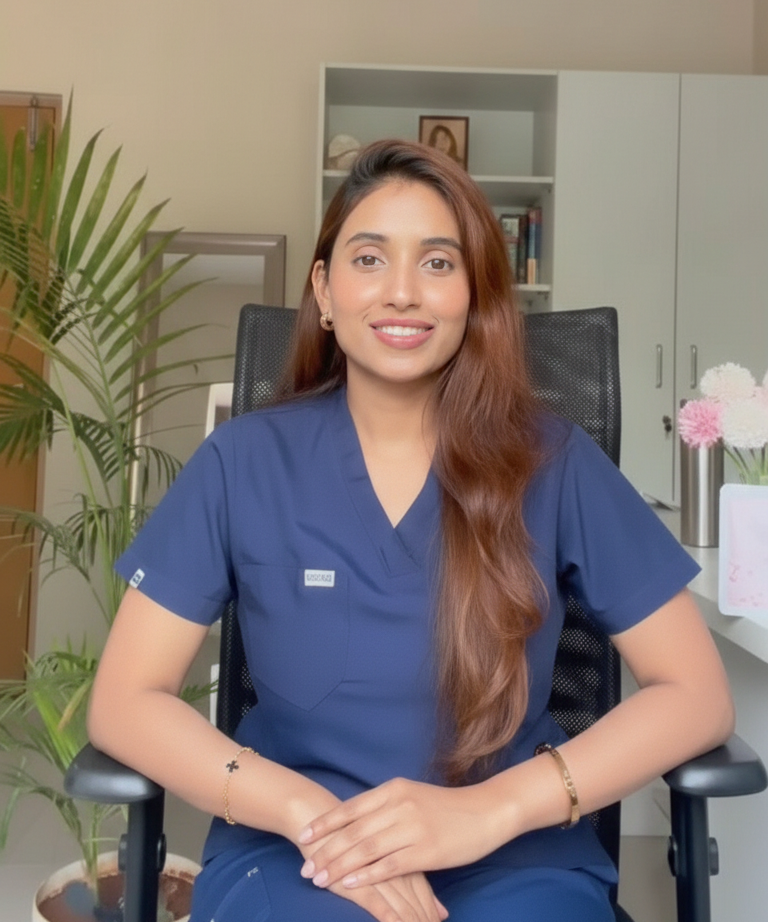
Medically reviewed by Dr. Vishakha Iyer — MBBS, Diploma in Practical Dermatology (Cardiff University, UK) · Last updated: October 2026
Unwanted facial and body hair in PCOS (called hirsutism) is caused by higher levels of male-type hormones (androgens), which turn fine, light hair into coarse, dark hair on the upper lip, chin, jawline, chest and abdomen. It is very common: polycystic ovary syndrome affects about 10–13% of women of reproductive age, and excess hair is one of its most frequent signs (International PCOS Guideline, 2023). The good news is that it can be treated well — usually by combining hormone treatment, which slows new growth, with laser hair reduction, which removes the hair that is already there.
What is hirsutism, and why does PCOS cause it?
Hirsutism means coarse, dark hair growing in a male-type pattern in women. In PCOS, the ovaries (and sometimes the adrenal glands) make more androgens, and insulin resistance — common in PCOS — pushes androgen levels higher still. Hair follicles in androgen-sensitive areas respond by producing thicker, darker, longer hairs.
Typical areas are the upper lip, chin and jawline, sides of the face, neck, chest, around the nipples, the lower abdomen, inner thighs and lower back. Many women with PCOS also notice acne, irregular periods, weight gain, or thinning of scalp hair at the same time — all driven by the same hormones.
When should you see a doctor?
- New coarse hair on the face, chest or abdomen, especially if it is increasing
- Irregular or missed periods, acne or scalp hair thinning alongside the hair growth
- Hair growth that started suddenly or is getting worse quickly, or a deepening voice — these need prompt medical tests to rule out other causes
A doctor will look at the pattern and amount of hair, ask about your periods and medicines, and may suggest blood tests (hormones, thyroid, blood sugar) to confirm PCOS and rule out other conditions. PCOS is usually diagnosed when two of three features are present: irregular periods, signs of high androgens (such as hirsutism or acne), and polycystic ovaries on ultrasound.
Treatments for PCOS hair growth that work
The Endocrine Society’s guideline on hirsutism recommends treating it from two sides: medicines that lower the effect of androgens, and direct hair removal (Endocrine Society hirsutism guideline).
1. Hormone treatment (prescribed by your doctor)
- Combined oral contraceptive pills are the usual first choice for women who are not trying to conceive. They lower androgen levels and slow new hair growth, but results take about six months to show.
- Anti-androgen medicines (such as spironolactone) may be added if the pill alone is not enough after about six months. They must be used with reliable contraception because they are not safe in pregnancy.
- Weight and lifestyle: in women with PCOS who are overweight, losing even 5–10% of body weight can lower androgen levels and improve periods, acne and hair growth over time.
2. Laser hair reduction
Laser energy targets the pigment in the hair follicle and damages it, so the hair grows back finer and sparser. For darker Indian skin, guidelines favour long-wavelength lasers, which are safer for skin colour. At Cheveuderm, laser hair reduction uses long-pulsed Nd:YAG (1064 nm) and diode (810 nm) lasers, set for your skin type.
With PCOS, expect a few more sessions than usual and occasional top-up sessions later, because the hormones keep stimulating new follicles. Combining laser with hormone treatment gives the most lasting result: the medicine slows new growth while the laser clears existing hair.
3. Short-term methods
Threading, waxing, shaving and creams are safe to use while you wait for treatment to work. Shaving does not make hair grow back thicker — that is a myth. Frequent waxing or plucking can, however, cause ingrown hairs and dark marks on darker skin, so it is worth reducing once laser treatment starts.
PCOS and scalp hair thinning
The same androgens that cause facial hair can thin the hair on your scalp, usually as a widening parting. This needs a different plan from facial hair. Read about hair loss treatment, including PCOS hair loss, at Cheveuderm.
Frequently asked questions
Is laser hair removal permanent for PCOS?
Laser gives long-term reduction rather than permanent removal. With PCOS, some new hair can appear over time because of hormones, so most women need occasional maintenance sessions. Treating the hormones at the same time reduces how often these are needed.
How many laser sessions will I need?
Most people need a course of about 6–8 sessions spaced several weeks apart. With PCOS, a few extra sessions and later top-ups are common. Your doctor will plan this after seeing your skin and hair type.
Can PCOS hair growth go away on its own?
It rarely goes away by itself, because the hormone imbalance continues. It does improve with treatment: hormone medicines and weight loss slow new growth, and laser removes existing hair.
Will threading or shaving make it worse?
No. Shaving and threading do not make hair grow thicker or faster. Waxing and plucking can cause ingrown hairs and dark marks, which is a reason to move to laser once possible.
Key takeaways
- Unwanted hair in PCOS is caused by raised androgens and is very common.
- The best results come from combining hormone treatment with laser hair reduction.
- For Indian skin, long-wavelength lasers such as Nd:YAG are the safer choice.
- Expect a full laser course plus occasional top-ups; laser gives long-term reduction, not permanent removal.
- Sudden or rapidly worsening hair growth needs medical tests to rule out other causes.
Book a consultation with Dr. Vishakha Iyer at Cheveuderm, HBR Layout →