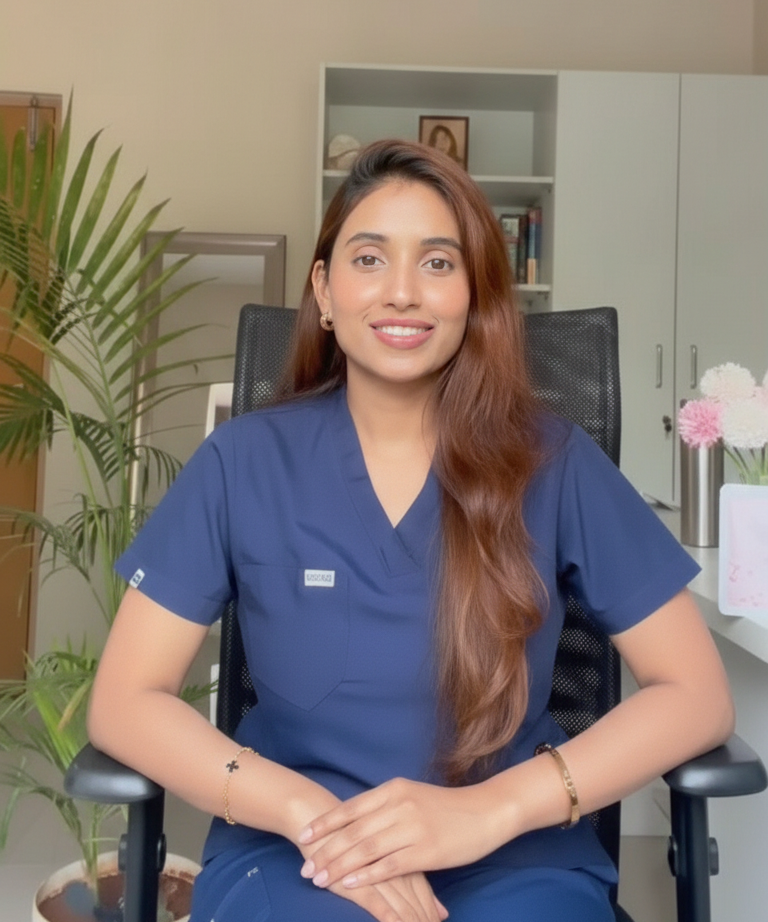
Almost every day, someone walks into my clinic and asks the same question: “Doctor, my pores look so large — can they be closed permanently?”
It’s one of the most common skin concerns I see — and also one of the most misunderstood. There are hundreds of products out there claiming to “close” your pores. So let me clear things up properly, the way I explain it to my patients.
First — What Are Open Pores?
Every pore on your face is a tiny opening connected to a hair follicle and a sebaceous (oil) gland underneath. These openings are normal. They exist on everyone’s skin. You need them.
The problem starts when these pores become visibly enlarged — you can see them clearly on your nose, cheeks, forehead, or chin, and no amount of moisturiser seems to help.
Pores don’t literally “open” or “close.” They don’t have muscles. What changes is how stretched or prominent they look — and that depends on several factors.
What Causes Open Pores on Your Face?
In my experience treating skin in Bangalore, these are the most common reasons I see enlarged pores:
Excess sebum (oil) production is the biggest one. When your oil glands are overactive, sebum collects in the pore and stretches it from the inside. This is why people with oily or combination skin tend to have more visible pores — especially on the T-zone.
Loss of collagen and elastin around the pore wall makes the surrounding skin less firm, causing the pore to appear wider. This naturally happens with age — but sun exposure, pollution, and smoking accelerate it significantly. Bangalore’s heat and UV levels don’t help.
Genetics plays a bigger role than most people want to hear. If your parents had large pores, you are more likely to as well. Skin type and pore size are largely inherited.
Clogged pores are another reason. When dead skin cells, oil, and debris accumulate inside a pore, it stretches and becomes more visible on the surface. This is also what forms blackheads.
Past acne and sun damage can permanently stretch and damage pore structure over time, making them look larger even after the acne itself clears.
Can You Actually Shrink Pores at Home?
Here’s the honest answer: you cannot permanently shrink pores with home remedies. Pore size is structural. But you can make them look significantly smaller — and keep them from getting worse — with the right routine.
Cleansing properly is the single most impactful home step. A gentle face wash used twice a day keeps excess oil and debris from collecting in pores and stretching them. If you’re in Bangalore and dealing with sweat and pollution daily, this matters even more.
Exfoliating regularly with a salicylic acid cleanser (BHA) helps dissolve the oil and dead skin inside pores rather than just on the surface. This is what actually reduces the “filled-up” look that makes pores appear so visible. Two to three times a week is enough — more than that and you’ll irritate your skin barrier.
Niacinamide is the ingredient I recommend most to my patients for open pores. Used consistently at 5–10%, it visibly reduces pore appearance by regulating oil production and strengthening the skin barrier. Give it at least 8 weeks to show results.
Retinol (or retinoids, for more severe cases) is the gold standard for pore reduction in the long term. It increases skin cell turnover, prevents clogging, and stimulates collagen — which firms the skin around each pore and makes them look smaller. Start low and slow if you haven’t used it before.
Sunscreen every single day. UV radiation breaks down collagen in the skin surrounding pores. Without daily SPF, you’ll undo whatever progress you’re making. This is non-negotiable.
What about ice, tomatoes, lemon juice, and clay masks? Ice temporarily constricts the skin and can reduce pore appearance for a short time — it’s not a treatment, but it’s not harmful. Tomato and lemon are too acidic for regular use and can damage your skin barrier. Clay masks are genuinely useful for oily skin — they absorb excess sebum and reduce the clogged look — but their effect is temporary.
When Home Care Isn’t Enough
Some patients come to me after using every product on the shelf for years — and their pores still look the same, or have gotten worse. This is when clinical treatment makes a real difference.
MNRF treatment (Microneedling Radiofrequency) is the most effective treatment I use for open pores at Cheveuderm. The microneedles create controlled channels in the skin while simultaneously delivering radiofrequency energy deep into the dermis. This triggers significant collagen remodelling — the kind of structural change that visibly tightens skin around pores. Most patients see real improvement after 2–3 sessions. There is minimal downtime, and results build over the months that follow as collagen continues to regenerate.
Chemical peels work well for pores caused by clogging and surface congestion. A well-chosen peel exfoliates deep into the pore, clears the debris that stretches it, and resurfaces the skin. We use different types at Cheveuderm depending on your skin type and concern — some target oil and congestion, others focus on texture and pigmentation.
HydraFacial is an excellent option for regular maintenance. The vortex extraction step literally suctions out the content of clogged pores while simultaneously delivering hydrating serums. It’s great for patients who want visible, immediate improvement with zero downtime — and it works beautifully as an ongoing treatment every 4–6 weeks.
The Questions I Get Asked Most
Can pores be closed permanently? No — not permanently. But with consistent care and the right clinical treatments, they can be significantly minimised and kept that way.
Why are my pores suddenly getting bigger? Usually one of three reasons: increased oil production (hormonal changes, stress, diet), collagen loss as you age, or accumulated sun damage. If it’s a sudden change, it’s worth seeing a dermatologist to understand what’s driving it.
Does drinking water help with open pores? Staying well hydrated helps your skin barrier function, which indirectly keeps pores from getting congested. But hydration alone won’t visibly reduce pore size.
Are open pores more common in Bangalore? I do see it frequently here. The humidity and heat drive higher sebum production, and the pollution contributes to congestion. A consistent routine matters more in a city like this.
A Note Before You Start
If you’ve been struggling with open pores for a while and aren’t sure where to start — or if home care just isn’t making a difference — I’d encourage you to come in for a proper skin assessment. Pore treatment works best when it’s matched to the actual cause for your skin type. What works for one person may not work for another.
At Cheveuderm, we look at your skin carefully before recommending anything. There’s no one-size-fits-all approach here.
Dr. Vishakha Iyer is a Dermatologist and Aesthetic Medicine Specialist at Cheveuderm Skin & Hair Clinic, HBR Layout, Bangalore.