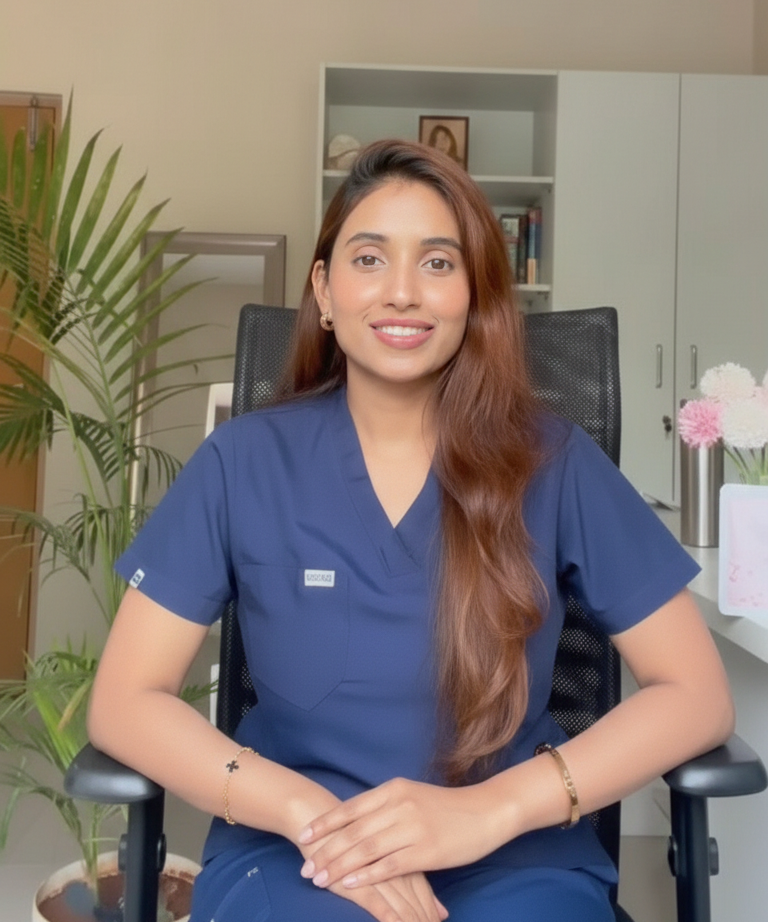
By Dr. Vishakha Iyer, Dermatologist and Aesthetic Medicine Specialist, Cheveuderm Skin & Hair Clinic, HBR Layout, Bengaluru
No, laser hair removal is not completely permanent, but it is long-lasting. After a full course of 6–8 sessions, most people have far less hair, and what grows back is finer and lighter. Many stay smooth for months or years, and a top-up session now and then keeps it that way.
This guide explains why the laser reduces hair rather than removing every last one, how many sessions you really need, what side effects to expect on Indian skin, and how laser compares with waxing, threading and shaving. For prices, areas and booking, see our laser hair removal in Bangalore page.
Laser hair removal at a glance
• Result: long-term reduction, not 100% permanent removal
• Sessions: usually 6–8
• Gap between sessions: about 4–6 weeks on the face, 6–8 weeks on the body
• After the first session: about 10–25% less hair (American Academy of Dermatology)
• Downtime: none; mild redness for a few hours to a day
• Best for: dark hair. Blonde, grey and white hair don’t respond.
Why laser reduces hair instead of removing all of it
The laser’s light is absorbed by the dark pigment (melanin) in the hair and turned into heat. The heat damages the follicle, so it grows back finer and sparser, or not at all.
The catch is timing. The laser only works on hairs that are actively growing. Each follicle goes through a cycle:
| Phase | What the hair is doing | Does laser work? |
|---|---|---|
| Growth (anagen) | Attached to the root and actively growing | Yes, this is when the laser works |
| Transition (catagen) | Detaching from the root | Poorly |
| Resting (telogen) | Sitting in the follicle before it sheds | No; it will grow later |
At any time, a large share of your follicles are resting. They survive the session and start growing weeks later. That is why one session is never enough, why the sessions are spaced weeks apart, and why a few follicles can recover over the years.
Hormones matter too. If you have PCOS or another hormonal cause, the body keeps making new hair. Laser still helps a lot, but you’ll usually need a few extra sessions and regular top-ups. The Endocrine Society’s hirsutism guideline recommends combining hair removal with treatment of the hormonal cause. Read more in our guide to PCOS and unwanted hair growth.
How many sessions of laser hair removal do you need?
Most people need 6–8 sessions. The spacing depends on the area, because hair grows at different speeds on different parts of the body.
| Area | Typical course | Gap between sessions |
|---|---|---|
| Upper lip, chin, jawline | 6–8 sessions, often more with hormonal hair | About 4–6 weeks |
| Underarms | 6–8 sessions | About 6–8 weeks |
| Arms, legs, back, chest, abdomen | 6–8 sessions | About 6–8 weeks |
| Bikini line | 6–8 sessions | About 6–8 weeks |
| Hair linked to PCOS or hormones | More sessions, plus regular top-ups | Planned by your doctor |
After the course, many people need a top-up once or twice a year. Your exact plan depends on your hair thickness, skin type and the area, and Dr. Vishakha Iyer sets it at your consultation.
What results look like, session by session
- Days 3–7 after a session: the treated hairs start to shed. This can look like regrowth, but the hairs are falling out.
- After the first session: about 10–25% less hair, according to the American Academy of Dermatology.
- Weeks 3–4 after each session: regrowth is slower and thinner.
- By the middle of the course: clear patches of smooth skin and much less frequent shaving.
- After a full course: most of the hair is gone, and what’s left is finer and lighter.
Does laser hair removal work on Indian skin?
Yes, with the right laser and settings. The risk with darker skin is that the skin’s own pigment absorbs some of the laser’s energy. Choosing the right wavelength avoids that.
| Laser | Best for | Why |
|---|---|---|
| Long-pulsed Nd:YAG, 1064 nm | Darker Indian skin tones (types IV–VI) | The longer wavelength passes the skin’s own pigment more safely and reaches the follicle deeper down |
| Diode, 810 nm | Lighter to medium skin with dark hair | Strong absorption by hair pigment, often needing slightly fewer sessions |
In a study of 150 patients with skin types IV–VI, long-pulsed Nd:YAG reduced hair by about 54% on average and was safe for most people (Rao & Sankar, Lasers in Medical Science, 2011). A test patch is always done first.
Laser hair removal side effects
According to the American Academy of Dermatology, the most common side effects are minor and last 1–3 days. Others are rare when a dermatologist does or supervises the treatment.
Common (a few hours to 3 days):
- Redness and small bumps around the hair roots
- Mild swelling
- A warm, slightly sunburnt feeling
Uncommon to rare:
- Darkening or lightening of the skin, more likely if you are tanned. It usually fades, but it can occasionally be permanent.
- Blisters or a burn, usually from settings that don’t suit the skin type
- A cold sore flare-up, if you get cold sores and have your upper lip treated
- Infection or scarring
- Rarely, finer hairs near the treated area can become thicker. This is reported more on the face and neck in darker skin, and is one reason the settings matter.
The right laser for your skin, a test spot, no tanning before treatment and good sun protection afterwards keep these risks low. This is why the choice of clinic matters more than the price.
Who laser won’t help, and who should wait
- Blonde, red, grey or white hair: the laser needs dark pigment to work, so these hairs don’t respond.
- Recently tanned skin: wait until the tan fades to lower the risk of dark or light patches.
- Pregnancy: treatment is usually postponed until after delivery.
- Recent acne tablets (isotretinoin) or medicines that make you sun-sensitive: tell the doctor, because the timing may need to change.
- Keloids or a history of poor healing: mention it at your consultation.
Laser vs waxing, threading and shaving
| Method | How long results last | Pain | Ingrown hairs and dark skin | Long-term cost |
|---|---|---|---|---|
| Shaving | 1–3 days | None | Common, especially underarms | Low, but never ends |
| Hair removal cream | A few days | None, but can sting or irritate | Moderate | Low, but never ends |
| Threading (face) | 2–4 weeks | Moderate | Can cause bumps | Low, but never ends |
| Waxing | 3–6 weeks | Moderate to high | Common | Adds up over the years |
| Laser hair removal | Long-term reduction, with occasional top-ups | Mild snapping or warmth | Usually improves | Higher up front, much less afterwards |
Laser also helps the ingrown hairs and dark, rough skin that regular shaving or waxing leaves behind, which is why the underarms are one of the most common areas we treat. For fine facial “peach fuzz”, which laser doesn’t target well, dermaplaning is a different option; see why dermaplaning is different.
Common myths about laser hair removal
“The hair grows back thicker.”
No. Hair that returns after laser is usually finer and lighter. (Shaving doesn’t make hair thicker either; the blunt tip just feels coarse.)
“Laser can cause cancer.”
There’s no evidence that it does. The light works on the hair follicle in the skin, and it isn’t the kind of radiation used in X-rays.
“You can’t have laser in summer.”
You can, as long as you don’t tan the area and you use sunscreen every day. In Bangalore that means sunscreen even on cloudy days.
“One session is enough for small areas.”
No. Every area needs a course, because only growing hairs respond at each session.
How to prepare, and what to do afterwards
Before your session:
- Avoid sun tanning for about 4 weeks.
- Don’t wax, pluck or thread for about 4 weeks. Shaving is fine, because it leaves the root in place.
- Shave the area the day before.
- Skip perfume, deodorant and creams on the area that day.
After your session:
- Use a soothing moisturiser and sunscreen on exposed areas.
- Avoid direct sun, hot showers, steam and saunas for 24 hours.
- Don’t wax or pluck between sessions; shave if you need to.
- Keep to your schedule. Skipped or late sessions slow the result.
How much does laser hair removal cost?
The cost depends on the area, its size and the number of sessions. A small area such as the upper lip or underarms costs less per session than full legs or the back. At Cheveuderm, Dr. Vishakha Iyer gives you the exact price for your areas at the consultation, before you start. See laser hair removal cost in Bangalore for the areas we treat.
Very cheap packages can cost more in the end if the laser or settings don’t suit your skin: you may need more sessions, or have to treat pigment changes afterwards.
Frequently asked questions
Does laser hair removal hurt?
Most people feel a quick snap, like a rubber band, or a warm prick. Cooling keeps it comfortable, and sensitive areas can be numbed first.
Which areas can be treated?
Upper lip, chin, jawline, sideburns, underarms, arms, legs, back, chest, abdomen and bikini line.
How long does a session take?
A small area like the upper lip takes minutes. Large areas like the legs or back take longer.
Can men have laser hair removal?
Yes. Men often treat the back, chest, shoulders and neckline.
Do I need top-ups?
Many people need one or two a year after the main course, more if hormones play a part.
Is laser hair removal safe for dark skin?
Yes, with a long-wavelength laser such as Nd:YAG, the right settings and a test patch first.
Book a laser hair removal consultation
Dr. Vishakha Iyer checks your skin type, hair colour and any hormonal cause first, then chooses the laser and settings for you, so you get the result without the risk.
Call or WhatsApp +91 72045 56730, or book a consultation online. Cheveuderm is at Plot no. 328, 4th Block, HBR Layout, Bengaluru 560043, close to Kalyan Nagar, Banaswadi, Hennur and Hebbal. Open Monday to Saturday 11 AM–7 PM and Sunday 11 AM–5 PM.
Read next: Laser hair removal in Bangalore: sessions, areas and cost · PCOS and unwanted hair growth · Dermaplaning
Sources
- American Academy of Dermatology: Laser hair removal FAQs
- Rao K, Sankar TK. Long-pulsed Nd:YAG laser-assisted hair removal in Fitzpatrick skin types IV–VI. Lasers in Medical Science, 2011. doi:10.1007/s10103-011-0922-1
- Endocrine Society: Hirsutism clinical practice guideline