If you’ve spent any time on skincare content recently, you’ve almost certainly come across the term “glass skin.” Skin so clear, smooth, and luminous it appears translucent — like a pane of glass. It’s the defining aesthetic of Korean beauty, and increasingly, the skin goal that most patients at Cheveuderm describe when they tell us what they’re working towards.
But what does glass skin actually mean in practical terms? Is it achievable for Indian skin? And what’s the difference between the glass skin routine you can build at home and what in-clinic Korean skin treatments can add?
This guide answers all of that — practically and honestly.
What Is Glass Skin?
Glass skin is not a product — it’s a skin condition. Specifically, it describes skin that has:
- Even, uniform tone — no visible redness, pigmentation, or discolouration
- High hydration — skin that looks plump and dewy from within, not oily or shiny on the surface
- Smooth texture — no visible pores, bumps, or rough patches
- Luminosity — skin that reflects light evenly, giving a translucent glow
The reason Korean skin care philosophy produces this result more consistently than Western approaches is its emphasis on prevention and hydration first, treatment second. Rather than using aggressive actives to fix existing problems, the Korean approach builds a strong, well-hydrated skin barrier that makes problems less likely to develop.
For a deeper look at Korean beauty philosophy and the 10-step routine framework, see our guide on Korean skin treatment.
Can Indian Skin Achieve Glass Skin?
Yes — and in some ways, Indian skin has natural advantages for this goal. Melanin-rich skin types age more slowly, tend to maintain plumpness longer, and can achieve a natural luminosity that lighter skin types often can’t.
The main challenges for Indian skin specifically:
- Post-inflammatory hyperpigmentation — any inflammation (acne, irritation, friction) leaves darker marks on Indian skin more readily than on lighter skin tones. Managing this is the biggest barrier to glass skin for most Indian patients
- Uneven tone from sun exposure — Bangalore’s year-round UV leads to cumulative pigmentation if SPF isn’t used consistently
- Hard water — mineral deposits from Bangalore’s borewell water coat the skin and dull natural luminosity
Addressing these three factors is the foundation of the glass skin routine for Indian skin.
The Glass Skin Routine: Step by Step
Building glass skin at home requires consistency with a relatively simple routine — not an elaborate product collection. The steps below reflect the core of what actually works.
Step 1: Double Cleanse (Evening Only)
Remove sunscreen, pollution, and makeup with an oil-based cleanser first — then follow with a gentle water-based cleanser. This ensures the skin is genuinely clean without stripping the barrier.
Why it matters for glass skin: Residue left on the skin overnight blocks the absorption of everything you apply after, and contributes to dullness and congestion.
Step 2: Exfoliate Gently (2–3 Times a Week)
Chemical exfoliation — not physical scrubbing — is the Korean approach. A low-percentage AHA (glycolic or lactic acid) or BHA (salicylic acid) used 2–3 times a week removes dead cells from the surface, allowing light to reflect more evenly and active ingredients to penetrate better.
For pigmentation concerns: Azelaic acid is a gentler option that exfoliates while also inhibiting melanin production.
Step 3: Hydrating Toner / Essence
The essence step is distinctly Korean and often overlooked in Western routines. A hydrating toner or essence — containing hyaluronic acid, niacinamide, or fermented extracts — is patted gently into the skin to begin layering hydration before serums.
The technique matters: Gentle patting rather than wiping helps the skin absorb the product rather than pushing it across the surface.
Step 4: Serum — One Targeted Active
Pick one active serum based on your primary concern:
- Vitamin C: For brightening and pigmentation fading — apply in the morning
- Niacinamide: For pore refinement, oil control, and evening skin tone — morning or evening
- Retinol: For anti-ageing and texture improvement — evening only, with SPF in the morning
- Hyaluronic acid: For pure hydration and plumping — any time
How to get Korean skin faster at home: Consistency with a single targeted serum for 8–12 weeks produces more visible results than rotating between five products.
Step 5: Moisturise Well
Korean moisturisers tend to be lighter than Western ones — gel or gel-cream textures that layer well and don’t clog pores. Look for ceramides, peptides, and squalane.
How to repair skin barrier naturally: Ceramide-based moisturisers are the most evidence-backed approach. A compromised barrier — from over-exfoliation, hard water, or harsh products — causes persistent sensitivity, redness, and dullness. Rebuilding it with ceramides and gentle hydration takes 2–4 weeks of consistent application.
Step 6: SPF 30+ Every Single Morning
This is non-negotiable for glass skin on Indian skin. Sun protection prevents new pigmentation from forming, stops existing marks from darkening, and is the single biggest factor in whether your brightening routine actually works.
Korean rice water as a supplement: Korean rice water is rich in inositol (a compound that helps repair damaged skin cells) and antioxidants. Used as a final rinse or applied as a toner, it adds subtle luminosity over time — it’s one of the simplest natural additions to a glass skin routine.
What Korean In-Clinic Treatments Add
A home routine builds the foundation — but in-clinic Korean skin treatments accelerate the results significantly, particularly for concerns like pigmentation, pore size, and skin texture that topicals alone address slowly.
Korean Medifacial
A Korean medifacial combines a multi-step clinical protocol with the Korean facial massage technique — improving lymphatic drainage, skin circulation, and product penetration simultaneously. At Cheveuderm, our medifacial treatment includes Korean-inspired protocols for luminosity, elasticity, and a genuine glass skin effect.
HydraFacial
The HydraFacial produces the closest in-clinic equivalent to glass skin after a single session — simultaneous deep extraction and intense hydration infusion leaves skin visibly plumper, clearer, and more luminous. Monthly sessions build cumulative results. This is one of the most popular treatments for brides and patients wanting consistent skin quality.
Skin Boosters
Skin boosters take glass skin from the inside — hyaluronic acid micro-injections delivered into the dermis create structural hydration that topical products cannot replicate. The result is a plumpness and dewy quality to the skin that reflects light differently. A course of 2–3 sessions gives peak glass skin results that last 3–6 months.
Dermaplaning
Dermaplaning removes the fine vellus hair (peach fuzz) and outermost dead skin layer simultaneously — leaving the skin surface exceptionally smooth and allowing light to reflect evenly. Often combined with a HydraFacial for maximum glass skin effect.
Chemical Peels for Korean Skin Brightening
Korean skin whitening treatment in a clinical context often involves chemical peel treatment — particularly glycolic or lactic acid peels that brighten and even the skin tone progressively. At Cheveuderm, these are selected based on your skin tone and sensitivity to ensure safe brightening without triggering post-inflammatory hyperpigmentation.
Why Korean Skin Philosophy Works Better for Long-Term Results
The reason K-beauty produces consistently better long-term skin outcomes isn’t magic ingredients — it’s philosophy.
Barrier-first approach: Korean skincare prioritises maintaining a healthy skin barrier over aggressively treating problems. A strong barrier means less sensitivity, less pigmentation response to irritation, and less moisture loss — all of which contribute directly to glass skin.
Hydration as medicine: Western skincare historically treated hydration as a basic step. Korean skincare treats it as a therapeutic intervention — layering multiple hydrating products to achieve deep, sustained moisture that changes skin quality structurally over time.
Prevention over correction: From a young age, Korean skincare culture emphasises protecting skin from sun damage, pollution, and irritation — rather than reacting to damage after it occurs. For Indian skin in Bangalore’s environment, this preventive philosophy is directly relevant.
Gentle, consistent exfoliation: Rather than occasional aggressive exfoliation, Korean routines use mild daily or near-daily exfoliation that keeps the surface clear without repeatedly damaging the barrier.
Glass Skin Routine for Beginners: The Minimum Effective Version
If the full routine feels overwhelming, here’s the minimum that makes a visible difference:
- Gentle cleanser — morning and evening
- Niacinamide serum — morning (controls oil, reduces marks, brightens)
- Light moisturiser with ceramides — morning and evening
- SPF 30+ — every morning without exception
- HydraFacial — once a month for accelerated results
That’s it. Five steps and one monthly in-clinic session produces visible glass skin improvement for most people within 6–8 weeks.
For medifacial cost in Bangalore and what to expect from pricing, see our medifacial cost guide.
Frequently Asked Questions
What is glass skin? Glass skin refers to skin that is highly hydrated, even-toned, smooth, and luminous — appearing almost translucent like glass. It is the defining aesthetic of Korean beauty and is achieved through consistent layered hydration, barrier protection, and gentle exfoliation.
How to get Korean skin naturally at home? The core steps are: double cleanse in the evening, use a hydrating essence, apply one targeted serum (vitamin C for brightening, niacinamide for evenness), moisturise with a ceramide formula, and apply SPF every morning. Consistency for 8–12 weeks produces visible results.
Is the glass skin routine suitable for Indian skin? Yes — with adjustments. Indian skin needs strong emphasis on SPF (to prevent sun-induced pigmentation), gentle exfoliation (harsh exfoliation worsens post-inflammatory marks), and good barrier support. The Korean approach’s gentleness and hydration-first philosophy works particularly well for Indian skin types.
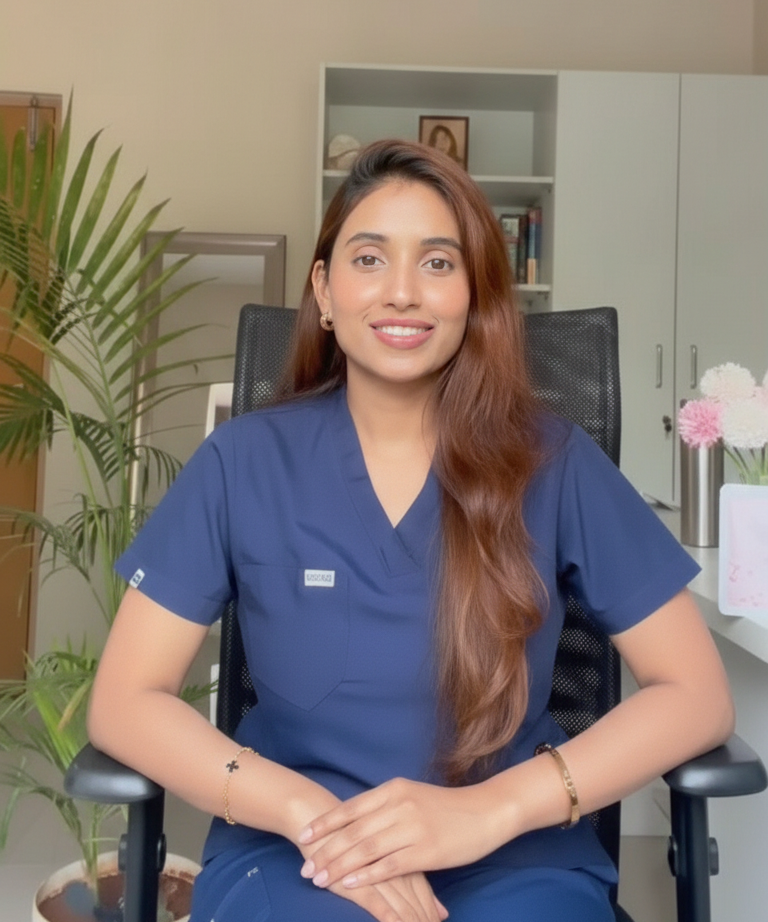
What is Korean skin whitening treatment? Korean skin brightening in a clinical context involves treatments that even skin tone and reduce pigmentation — including chemical peels, HydraFacial with brightening serums, and skin boosters. The focus is on achieving luminosity and evenness, not blanching the skin. At Cheveuderm, these are selected and supervised by Dr. Vishakha Iyer based on your skin tone and concern.
How long does it take to achieve glass skin? With a consistent home routine: 6–10 weeks for noticeable improvement. With monthly in-clinic treatments (HydraFacial, skin boosters): visible glass skin quality within 3–4 sessions.
Which in-clinic treatment gives the best glass skin results? For immediate results: HydraFacial (single session). For structural, lasting results: skin boosters (course of 2–3 sessions). For maximum combined effect: dermaplaning + HydraFacial. For brightening and even tone alongside texture: chemical peel course.
Key Takeaways
- Glass skin is a skin condition — not a product. It’s the result of high hydration, even tone, refined texture, and a healthy barrier, achieved through the Korean skincare philosophy
- The glass skin care routine at home requires: double cleanse, gentle exfoliation, layered hydration, one targeted serum, ceramide moisturiser, and daily SPF
- How to get Korean skin on Indian skin requires particular focus on SPF, gentle exfoliation, and post-inflammatory pigmentation management
- In-clinic treatments — HydraFacial, skin boosters, and dermaplaning — accelerate glass skin results significantly beyond what home care alone achieves
- The Korean approach works because of its philosophy — barrier-first, hydration as therapy, prevention over correction — not because of any single ingredient
Want glass skin results faster? At Cheveuderm, Dr. Vishakha Iyer builds a personalised skin plan combining the best of Korean skincare philosophy with clinical treatments tailored to your skin. Book a skin consultation at Cheveuderm, HBR Layout, Bangalore.
Explore all skin and face treatments at Cheveuderm — from HydraFacial and skin boosters to chemical peels for brightening.
Cheveuderm Skin & Hair Clinic | 819, 1st Stage, 3rd Block, HBR Layout, Bengaluru 560043 | +91 97427 81895